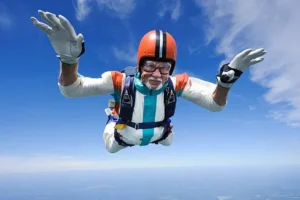
What kind of long-term retirement are you planning for?
What happens when the routine that shaped your life for decades suddenly disappears? Most people spend years dreaming about retirement — the freedom, the rest, the long-overdue time to just breathe.
But for many, the reality lands differently. Your daily routines suddenly change, creating a big gap where your professional identity used to be.
Research shows that up to 40% of retirees experience depression at some point during the transition period.
Let’s find out why that happens, and how to build a retirement that genuinely supports your mental, emotional, and physical well-being.
Why Retirement Can Feel Emotionally Difficult
Most people prepare financially for retirement.
Very few prepare psychologically.
Work does more than pay the bills. It provides you with a routine, identity, social connection, and a feeling of contributing.
When it ends, all of those things can disappear at once.
Suddenly, there is no reason to set an alarm. Fewer conversations happen throughout the day. Weekends feel exactly like weekdays, and weekdays start to feel purposeless. Everyday life changes when weekends no longer feel special because they match every weekday.
You might find yourself wondering what to do with hours that once felt precious.
You might feel less needed or struggle with the emotional shock of having too much unstructured time.
Relationships at home can also shift as couples spend more time together.
How Routines Support Mental and Physical Health
While routine may seem dull, it is actually one of the most effective tools for preserving your health as you grow older.
Structure creates stability.
It gives your brain predictability, which reduces anxiety and helps control your mood throughout the day.
When your routines disappear, your sleep quality can suffer. Energy drops. Motivation becomes harder to find. The small daily habits you hardly notice, your morning commute, a lunch break, and a regular bedtime, were quietly holding a lot together.
- Emotionally, having a clear plan for the day lowers stress and provides a comforting sense of direction. It prevents the emotional drift that happens when you have too much empty time on your hands.
- Physically, consistent habits encourage movement, better eating patterns, and healthy sleep.
- Socially, regular commitments, even simple ones, create connections and reduce isolation.
Building purposeful routines in retirement is not about filling time.
It is about protecting your mental and physical health so you can enjoy it.
Small, consistent habits matter more than most people realise

The Hidden Risk of Losing Purpose in Retirement
Work gives people far more than a salary.
It provides identity, a sense of achievement, a reason to contribute, and a community to belong to. When retirement removes all of that at once, it can leave a gap that is surprisingly hard to fill.
That gap has a name: the purpose vacuum.
And it is one of the least talked about risks of retirement.
A current study in the National Centre for Biotechnology Information highlights that depression during retirement is closely connected to sudden changes in daily routines.
The emotional risks during this period are often triggered by:
Loss of Identity: Removing career titles and professional recognition.
Disrupted Routine: The sudden absence of the weekday structure and routine that work provides.
Social Isolation: The absence of casual daily interactions with work colleagues
Without purpose, motivation fades. Sedentary behaviour increases. Social withdrawal becomes easier to justify. Over time, disengagement from life is linked to cognitive decline and a measurably higher risk of depression.
Research consistently shows that people with a strong sense of purpose live longer, experience less cognitive decline, and report higher levels of happiness and resilience.
Purpose doesn’t need to be grand or career-focused; it just needs to provide you with a reason to engage with life every day.
The retirees who thrive are almost always the ones who have found something or several things worth getting up for.
Motivation may come and go, but having a daily purpose can help you lead a fulfilling life.
How you live your day is how you live your life.
Signs Retirement May Be Affecting Your Mental Health
Retirement and mental health are more closely connected than most people realise, and some early warning signs are easy to dismiss as simply “adjusting.”
But knowing what to look for can make a real difference to how quickly you get the right support.
A loss of interest in hobbies you once loved, difficulty sleeping or sleeping too much, or a growing tendency to withdraw from social situations.
Feeling aimless is one of the most commonly reported experiences.
Anxiety about your future, your finances and about ageing can also surface more powerfully than expected.
These signs are indicators that something might need a little extra attention.
These experiences do not make retirement a failure. They make it a human one.
The important thing is not to dismiss what you are feeling.
Seek support.
It’s not a weakness.
It is one of the more intelligent things you can do.

How To Find Purpose and Fulfilment in Retirement
The most important thing to understand is this: retirement can genuinely be the most purpose-rich chapter of your entire life, if you approach it with intention.
The goal is not to find one perfect purpose and commit to it forever. It is about exploring, experimenting, and staying open to what actually energises you.
Rediscover What You Used to Love
Recall the interests and passions you put on hold when work was your main focus
- The guitar sitting untouched in the spare room.
- The book you always wanted to write.
- The painting you planned to get back to.
- The sport you loved in your thirties.
These are not trivial distractions. Revisiting old interests can rekindle a sense of joy and self that you might have lost over the years of working.
Build New Daily Routines With Intention
A purposeful retirement does not happen by accident.
Structuring your days the way you might a good working week is one of the most powerful investments you can make in your own mental and physical well-being.
A morning walk, a planned coffee catch-up, connecting with like-minded people, or a creative project. If there’s nothing around that grabs your interest, set up something yourself.
It gives your week a sense of shape and forward movement. You do not need a rigid timetable. You just need enough structure to make each day feel genuinely purposeful.
Consistency turns small actions into a lifestyle.
Stay Socially Connected
Your social connections become especially important in retirement. Work naturally provides interaction, conversation, and a sense of belonging.
Once that disappears, isolation can quietly increase.
Connection does not need to be deep to be valuable. Regular, low-key social contact will improve your mood and cognitive health in powerful ways.
Joining community groups, sporting clubs, walking groups, book clubs, or volunteering can help rebuild that sense of connection.
You could also find fulfilment through mentoring younger people or by sharing your skills and life experiences.
Keep Growing and Learning
The brain thrives on challenge and novelty.
Online courses, a new language, travel with a learning focus, part-time consulting, or developing a skill you’ve always been curious about all provide the mental stimulation that keeps you sharp and engaged.
Continuing to grow at any age reinforces the sense that your best years are not behind you.
Exploring the benefits of neuroplasticity will shift your mindset toward growth and actively rebuild and strengthen your brain networks.
Give Back to Others
Nothing creates retirement fulfilment quite like helping the people around you. Retiree feedback consistently ranks it among the most fulfilling activities.
Contributing to others activates a deep sense of meaning that work once provided. And it does that without the stress that used to come with it.
Look into volunteering for local charities, helping with grandchildren, or taking on community involvement roles.
Knowing you are making a difference provides an incredible mental boost.
Focus on Your Physical Health
Movement is medicine. It’s one of the most direct routes to improved mood, confidence, and energy.
Regular physical activity reduces depression symptoms, supports cognitive health, and builds resilience. It doesn’t need to be intense.
Consistency matters far more than effort.
When you are unsure where to begin, ask yourself these three questions:
- What excites me?
- What impact do I want to have?
- What gives me real energy?
Take your time to decide.
The answers are already inside you.

Retirement Can Be A Reinvention — Not A Withdrawal
It is time to completely flip the script on what it means to grow older today.
Retirement is absolutely not the end of your usefulness or your contributions to society.
Modern retirement should be an active, purpose-driven adventure where you finally own your time completely.
We’re living longer and healthier lives than any previous generation.
A 60-year-old today may well have 30 or more meaningful years ahead of them.
That is not a footnote to your life.
It‘s the next’ chapter, and it deserves to be lived with as much intention and energy as any that came before it.
The only real question is: how do you want to live?
You can reinvent yourself at any age, whether you are 55, 65, or 75.
The most fulfilling retirements aren’t sedentary.
They are built on intention.
Achieving true retirement satisfaction doesn’t happen automatically just because you have stopped working. A beautiful and healthy retirement lifestyle is something you intentionally build through routine, purpose, connection, and continuous personal growth.
Take control of your time and start planning your lifestyle changes with the same dedication you gave to your financial future.
The most fulfilling retirements are always built around personal purpose, not just endless free time.
So, what small step will you take today?